

How to Coax Milly …
… Out of her Bedroom Cocoon
Theme: The Burnout
Quick Take
Getting Milly out of bed is not as easy as it sounds…
Is it apathy, anxiety, stubbornness - or simply a very cosy duvet?
Caring for someone with dementia sometimes means becoming the voice of reason, and occasionally the voice of the doctor!
How to Coax Milly Out of Her Bedroom
Once again, I am inspired by a Daily Mail headline:
“How to coax your teenage hermit out of the bedroom.”
I really don't want to trivialise this. It is a serious subject, and I have enormous sympathy for parents trying to get teenagers out of their bedrooms and into the world.
But it did make me think about a side of dementia that can be incredibly difficult to manage, particularly for spouses and carers in the earlier stages: apathy.
It isn't laziness
Apathy is a recognised symptom of dementia. It is essentially a loss of motivation or drive. Someone may still be capable of doing something but simply doesn't have the motivation to start. They may withdraw, sit for long periods, rely on others to suggest activities or lose interest in conversations and things they used to enjoy.
And that can be very hard to understand.
It is all too easy to think someone is being lazy, stubborn or difficult. Even when we are more sympathetic, we might assume they are frightened, confused or simply don't want to bother.
The reality can be more complicated. Dementia can make ordinary activities harder and more exhausting. When something that used to be easy becomes difficult, the safest and easiest option can start to feel like doing nothing at all.
Welcome to the bedroom
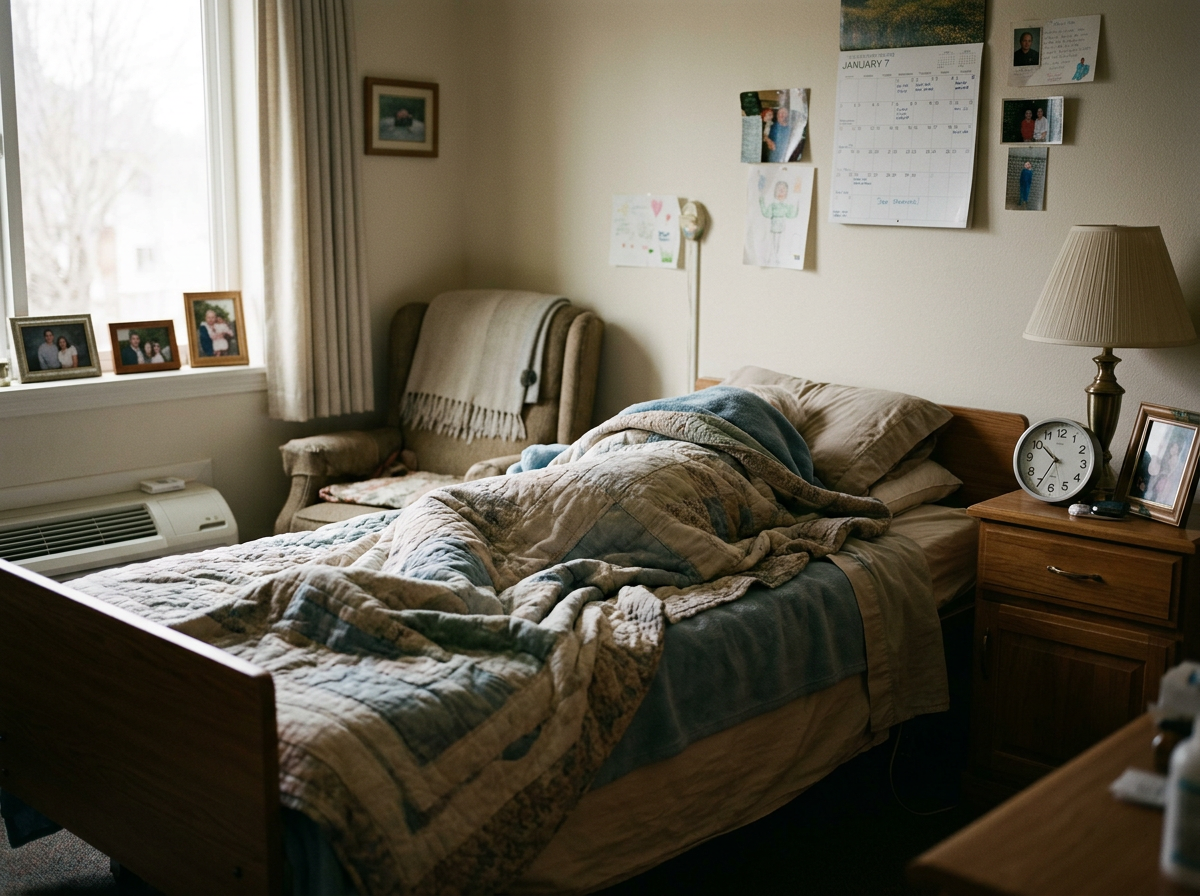
Milly is no different. She avoids, and has done for the last four or five years, the telephone, meeting friends, going to events and, basically, anything that involves leaving her lovely warm bedroom.
If she had the choice, I suspect she'd stay there all day.
She will tell you she doesn't. She loves going out. She loves seeing people. She loves lunch club and her social club.
But offer her a duvet day? She's all in.
I stay with her during phone calls and when friends visit. She copes perfectly well, but is often exhausted afterwards. I also don't tell her too far in advance about things we're going to do. Otherwise the worrying starts.
What will she wear? What will happen? Who will be there?
And then comes my personal favourite:
“Shall I go and get some biscuits or something?”
That one really winds me up.
She hasn't been shopping for herself for about five years!
I know she doesn't really know that anymore. But knowing and feeling are two completely different things.
So, how do I coax her out?
The truth is, I have to.
I need Milly to go to lunch club because it gives my husband and me a break.
I need her to keep moving because I want to keep her mobile for as long as possible. She has severe osteoporosis and a history of broken vertebrae, toes, fingers and, more recently, a hip.
Walking around the kitchen or the garden might not sound like much exercise, but for Milly it matters.
If she stayed in bed all day, every day, she could become bedbound surprisingly quickly.
So I have become rather good at persuasion.
My tricks
I tell her the doctor said so.
This is surprisingly effective.
I tell her it's good for her.
And sometimes I tell her that I want her to be around for as long as possible because I love her.
I tell her I need her to be mobile because it helps me.
This one works beautifully.
There is something about being needed that can be more motivating than being told something is good for you.
I choose carefully.
I try not to suggest things that will cause unnecessary stress or panic. Dementia can make busy or unfamiliar environments overwhelming, and social withdrawal can sometimes be linked to anxiety as well as apathy.
I keep a routine.
Knowing what is happening and having regular activities makes things easier. Routine is often recommended as a useful way of supporting someone with apathy.
And I pick my battles.
This may be the most important one.
Sometimes I persuade. Sometimes I encourage.
And sometimes I simply give in and let it go.
Becoming the voice of reason
Perhaps the biggest difference now is that Milly trusts me.
She may not remember why we're going somewhere or why I think something is important, but she trusts me to make the decisions.
That means I can sometimes be the voice of reason when she can't be.
I don't always get it right.
I can still get frustrated. I can still think, For goodness' sake, Milly, just get dressed!
But I've learned that pushing harder isn't necessarily the answer.
Apathy isn't a conscious choice, and blaming someone for it doesn't help. Encouragement, simple routines, meaningful activities and breaking things down into manageable steps can be more useful.
Not so different from a teenage hermit
And having read the Daily Mail article, I'm struck by how many similarities there are between coaxing a teenager out of a bedroom and coaxing someone with dementia into the world.
Don't announce it too early.
Don't make it more complicated than it needs to be.
Choose your battles.
Make it worth getting out of bed and don't expect a completely rational response.
The difference, of course, is enormous.
A teenager is usually choosing not to engage with the world or to engage in ways that cause concern.
Milly isn't. Her brain is making engagement harder and that distinction matters.
So I'll keep coaxing her out of her lovely warm bedroom cocoon.
Sometimes I'll use the doctor.
Sometimes I'll use love.
Sometimes I'll tell her I need her.
And sometimes I'll just bring her a cup of tea and let her stay there.
Because perhaps the trick isn't always getting someone out of the bedroom.