

Ready to Die - Until Not
I thought I’d got it sorted - I’m a nurse. I’ve got LPA’s. I chat about dying. I’ve a signed DNA. There’ll soon by an ‘End of Life’ Bill. Goodness - how wrong I was!

Theme: The Beauty
Quick Look:
Caring comes with chaos - and hidden joy.
No checklist survives reality.
Permission to let go of guilt.
The Weight of Caring
Caring for anyone brings love, grief, unexpected connections, exhaustion, surprises - and all too often that complicated emotion: guilt.
The Burden of Responsibility
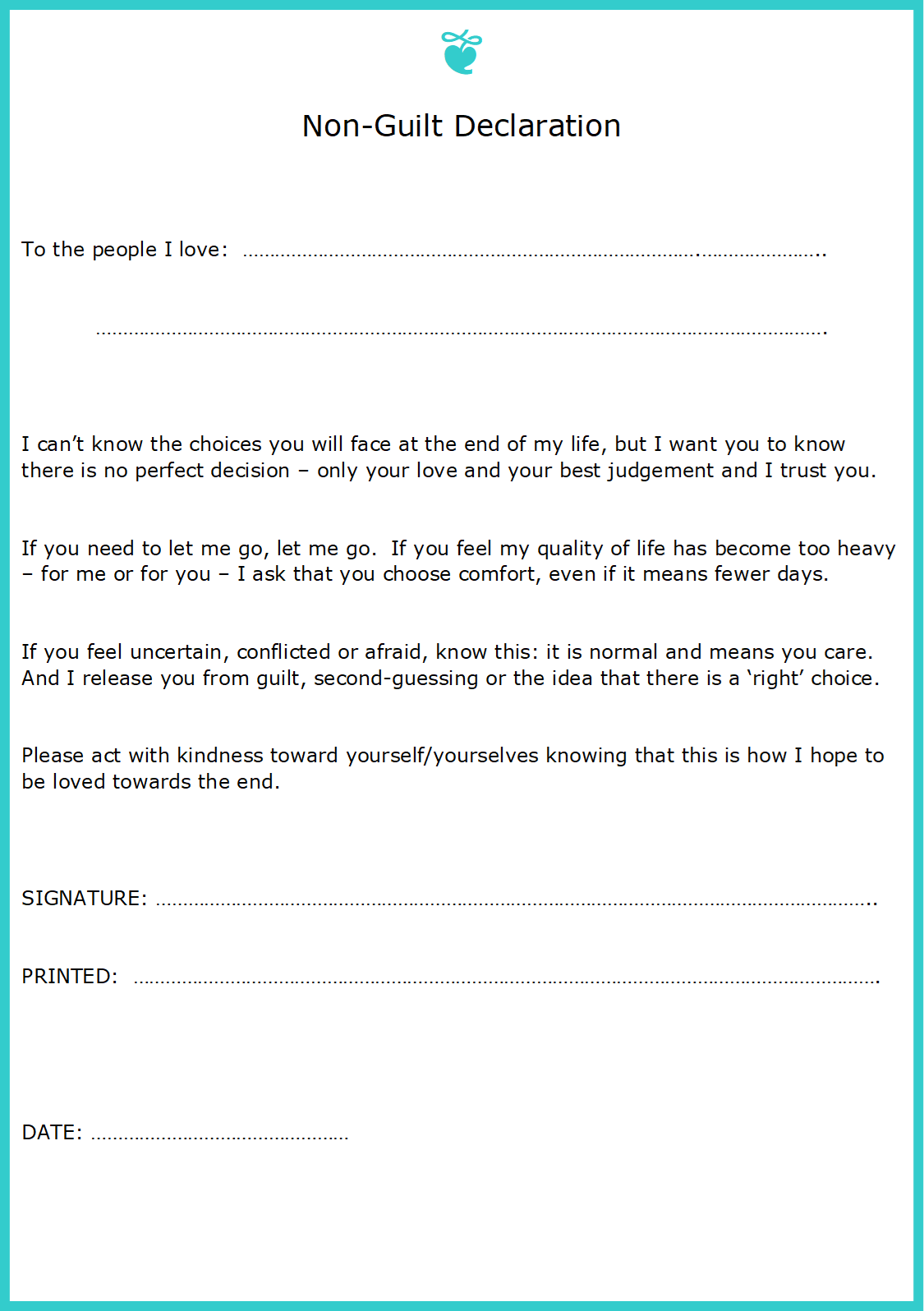
It doesn’t matter what documents we have or what someone has signed, significant responsibility is placed on family members. I wonder something like a ‘Non-Guilt Declaration’ might actually be a nice idea - encouraging talking and sharing?
Guilt in all Directions
I feel guilt for not doing enough and guilt for doing too much - and for turning my husband’s life upside down. There’s my guilt over rushed decisions and guilt over delayed ones. Then there’s the guilt around hoping Milly will die before we ‘lose her’ completely. Linked to this is the guilt wrapped up in my thoughts about avoiding hospital admissions because I know the distress they bring for someone with dementia - not least the risk of Milly ending up in corridor care, something we’ve already experienced.
Guess Work and Gut Feelings
Now that Milly can no longer express her wishes clearly, every decision feels like a test. This treatment? That treatment? No treatment? Dementia has pushed me into being an interpreter, advocate, comforter, and decision-maker - roles I don’t always feel qualified for.
Guilt is everywhere. Nursing background or not. Conversations or not. Prepared or not.
The Idea of Dying Plans
My experience of death, as a nurse, has not been negative and dying has never been something that frightens me. Talking about it has always felt natural.
For a long time, I thought creating a dying plan - like a birth plan - was the way forward for all of us. Building our knowledge, learning about choices, considering preferences, reducing surprises. I felt it had to be better than pretending death won’t happen.
I believed a DNR (Do Not Resuscitate order) and some sort of assisted dying legislation would take away some of the more difficult decisions and fears.
I thought I had everything in hand. Until my father’s death and my mother’s dementia.
When Plans Meet Real Life
My father and I had talked about dying plans. We’d always chatted easily, and he often said what many say: “I’d hate to be helpless and I don’t want to be a burden, so please let nature take its course.”
In his mid-eighties he became extremely ill with COVID and stopped all his medication in hospital. He’d had a rotten experience, as so many did, and when he begged to be free from pain and refused further treatment, it made sense to me. This was the father I knew, and I have to confess I was relieved. I wanted to let him go. His life was already difficult with multiple chronic conditions and frequent hospital stays to adjust heart medicines.
We were very lucky to get him home for palliative care - safe, comfortable, ready to die.
Surprises Around every Corner
Then, unexpectedly and after he’d been home for a few weeks, he asked to start treatment again.
I panicked. He was still very poorly and I was scared - for him, for my mother, and for myself. He just smiled: “The odd visit from one of the grandchildren and seeing their smiles, that will be worth all these problems - plus a few glasses of wine!”
He restarted a few medications, gently reintroduced. About ten days later, he suffered a fatal heart attack - likely because he hadn’t been on his heart medicines for some time.
When Conversations Matter More Than Plans
When he died I felt guilty - should I have let him stop his medication in hospital when he was confused and unwell? Should I have fought harder? I could feel guilt taking hold.
But then all our talking and honesty held me steady. We’d spoken many times about the fact that I might find decisions difficult, that I could make the wrong choice.
I was grateful we’d talked. In moments of deep grief I could return to all those conversations and know he would understand. Five years on, I still have moments of strong sadness and then I remember our chats and, I know he’d smile and reassure me about my thoughts.
When Talking About it is Too Difficult
Milly, on the other hand, has never felt comfortable talking about dying, often calling me and my father morbid whenever the subject came up.
She’s always said she’ll go on forever: “I’m scared of missing something!” Her commitment to living can’t be questioned - osteoporosis and multiple falls, serious injuries, long hospital stays, cancer, lung disease - and here she is, over 90 and going strong. And of course, in her words, she doesn’t have dementia - just “an old and lazy brain”!
But there is one conversation we’ve had many times. Because I understand the difficulties people face at the end of life, I’ve told Milly that I fear I might make the wrong choice or let her down - that I might choose the easier option for me. Her response has always been the same: she understood, and she knows, I will do my best.
Real Life - and Real Death - Are Rarely Simple
As a nurse, I saw this again and again. As a daughter, I lived it.
A DNR might stop resuscitation, but it doesn’t stop doubt. And with dementia, everything is even less predictable. One week Milly seems stable, the next she’s terribly confused, and then suddenly she’s herself again. How do you plan for that?
The challenges at the end of life often involve infections, antibiotics, hospital admissions, feeding and fluids. Questions about introducing, continuing, or stopping treatment. Managing pain. Discussing what comfort really means.
We can’t predict what’s ‘best’ but we can prepare our loved ones with understanding, reassurance, and compassion. And that’s where the Non-Guilt Declaration comes in - a way to help families breathe a little easier when the hardest decisions arrive.
A Conversation Starter
A DNR tells doctors what not to do. A Non-Guilt Declaration tells families: It’s okay. You don’t have to carry the guilt. Be kind to yourself and choose peace.
The idea of a Non-Guilt Declaration is not to tell anyone what decisions to make. It’s NOT a legal form. It’s not a checklist. It’s a conversation starter encouraging honest dialogue about fears, wishes, and comfort, which is often difficult in dementia or end-of-life care.
It’s a shared understanding - a message of reassurance: “I can’t know the choices you will face at the end of my life, but I want you to know there is no perfect decision. There is only your love, your instincts, and your best judgment - and I trust you.”
A Small Find
Milly might not want to talk about dying but every time she’s been to a funeral she’s shared her fear of an empty church or crematorium. “There’ll be no-one at mine. Most of my friends will have died, or they’ll be too old to travel.”
We’ve laughed about me renting a crowd and hiring a coach and she’s consistently added her dream: a big brass band playing the Royal Artillery Slow March. I’ve completely ignored this and she’d half-smile, knowing it wouldn’t happen.
Caring for Milly at home has brought another unexpected find. I feel more connected to her than I ever was before. Now think I might just organise it!