

Understanding some of the science helps me respond with more kindness
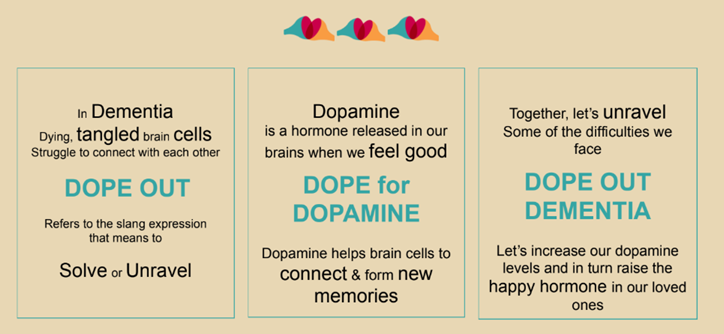
Dope Out Dementia
Because LOVE CONNECTS
Theme: The Beauty
Quick Take:
Dopamine doses: move, laugh, connect, repeat.
Small pleasures make a real difference for the brain.
Gentle dopamine boosts support curiosity, motivation, and joy.
A spoonful of sugar helps the medicine go down - and a spoonful of happy helps the dopamine flow.
Whenever people think of dementia they think of memory and what’s fading or what’s lost. In Last and Found I keep focussing on learning and finding the fun as well as the things that help me make a difference. Dopamine ticks the boxes.
Dopamine plays an important part in motivation, reward, and reinforcing connections between brain cells It helps brain cells ‘talk’ to each other and strengthens new connections, new experiences.
It’s often called the motivator chemical transmitter and seeing as both carer and sufferer need ALOT of motivating, it feels pretty relevant!
What is Dopamine?
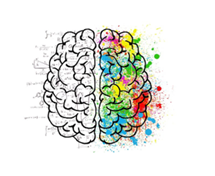
It’s a chemical messenger that helps brain cells (neurons) communicated. It’s very important for:
reward and motivation
learning and memory
mood regulation
control of movement
Scientists know that dopamine systems are disrupted in conditions like Parkinson’s and Alzheimer’s disease -
so activities that engage dopamine pathways may support learning and wellbeing. Happiness is good for us!
How does Dopamine work?
When something good happens - like a laugh, a song you love, a smile from someone you care about - dopamine tells your brain that it feels good and says ‘let’s do it again’.
It strengthens the connections involved in that moment, making it easier to recall or repeat the experience the next time.
When there’s too little dopamine, movement and motivation can falter (as in Parkinson’s). When there’s too much, the brain over-reinforces certain habits or cravings (as in addiction). A healthy brain sits somewhere in the middle - balanced, curious, and open to joy.
Quick Dopamine Fixes
A deep tummy laugh. A square of dark chocolate. A message from someone you love. A favourite song. These aren’t cures but they might offer relief and connection.
These tiny moments matter. They’re like gentle reminders to your brain: You’re alive. You’re loved.
Steady Dopamine Drips
Every day joy is as good as any medicine.
Sunshine on your face. Walking or dancing. Breathing mindfully or gentle stretching. Good quality sleep. Cold water on your skin. A song from a daughter!!!
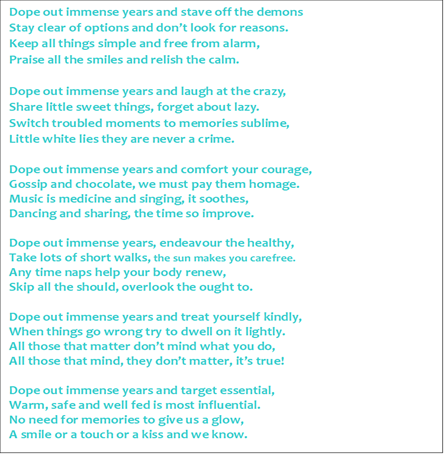
Every single word in my song “Dope Out Immense Years” was written from the heart, shaped by my experience with Milly.
In the early days, Milly would have been quite happy to keep life simple, as she does now. But she felt guilty, always worrying she was being lazy and that she “ought to do something”.
I used to say to her so often, especially when she worried she was annoying a friend or had forgotten a birthday:
“All those who matter don’t mind what you do. All those who mind don’t matter - it’s true.”
She loved this expression in the past but I’m not sure she truly believed it. And in a way, it isn’t completely true - because without the full picture, some friends can feel very hurt. This is one of the difficulties many people face in the early days, when memory issues are embarrassing and ignored for as long as possible and the truth is not spoken.
So… bring on the dopamine!!!
How Love Helps
It really is a chemical reaction.
Love helps us release oxytocin, serotonin, endorphins, and dopamine, creating a cascade of calm and connection.
When we feel love we feel safer and that helps the brain to function more efficiently and responsive.
So when you hold a hand, share a laugh, or sing an old favourite song with someone living with dementia, you’re not just being kind. You’re helping their brain cells connect - literally strengthening the pathways.
Dope Out Dementia! It’s a recipe for connection. And all this singing and laughing we do? It’s the dopamine hit that supports Milly’s wellbeing. Though she doesn’t know it!
A Note on the Science
The ideas in this piece are supported by neuroscience and dementia-care research and if you’d like better understanding of dopamine then good sources include: Alzheimer’s Society (UK), Dementia UK, NHS England, British Neuroscience Association, Mental Health Foundation and University of Cambridge neuroscience research.