What a heatwave and a sweet tooth reminded me about Dementia
Theme: The Beauty
Quick Take
Hunger doesn't always feel like hunger.
Refusal may hide an unmet need.
Look beyond the words.
Heat and Sweet
As temperatures have climbed this week, I've been reminded of two particularly interesting things I've learned from caring for Milly. They seem unrelated at first - her enthusiasm for sweet things and her apparent indifference to the heat - but discovering that both may stem from the same underlying reality has helped me become more patient and, more importantly, taught me to occasionally ignore what she says!
Dementia doesn't just affect memory - as regular readers will know I'm fond of saying. It can also affect a person's awareness of what their body is telling them, including signals relating to discomfort, pain, thirst, hunger and temperature.
Hot and Not Bothered
I've had to keep a really close eye on Milly during this heatwave. She denies being hot, thirsty or hungry. I can just about get my head around her not recognising hunger, but it still needs watching.
I can see her pink cheeks and know she's heating up. If she's not sweating, is that a warning sign? Is she becoming dehydrated?
The Alzheimer's Society explains that people living with dementia may not recognise that they are thirsty, and that the brain mechanisms which normally signal dehydration do not always work as effectively. That certainly rings true here.
We're really lucky to have a rather expensive fan that doesn't make too much noise - otherwise she'd insist on it being turned off. She's hates the noise.
Something Sweet
Meanwhile, I've learned to be much more flexible about Milly's craving for sweet things while simultaneously insisting she isn't hungry.
According to the Alzheimer's Society, it is common for people with dementia to develop a preference for sweeter foods. Changes in taste and smell, together with changes in the brain itself, can alter what foods are appealing and rewarding.
It's Not Stubbornness
I've read lots of theories about why many people with dementia develop a sweet tooth, but there doesn't seem to be one definitive answer.
Is it changes in the brain's reward system? Damage to the areas of the brain involved in regulating eating behaviour? Altered taste and smell?
Whatever the explanation - or frustration! - I eventually came to see it as another symptom of the disease rather than stubbornness or fussiness
Overwhelmed
Personally, I suspect that some of Milly's refusal of savoury food is linked to feeling overwhelmed rather than not being hungry.
So much of her behaviour seems to be about avoiding pressure and escaping potential stress. It makes sense to me that she may sometimes feel out of control, having to cope with someone else deciding what she needs and when she needs it.
Large portions, unfamiliar foods and complex meals can all become difficult to process.
Much easier to ask for a biscuit or a bit of cake.
Don't Fight It. Don't Ask.
I rarely ask, "Do you want lunch?" because the answer is usually no. Followed by ‘I wouldn’t mind a bit of chocolate though.”
The question itself creates pressure.
But Milly never says no to a cuppa, so I put everything in front of her alongside a cup of tea.
Sometimes she has an immediate reaction of irritation or confusion, but I simply say, "Here's your lunch, Milly. Just eat what you feel like."
I also make the portions very small. I'd rather she ate a little than nothing.
Forget Culinary Adventures at 90!
I've also gone back to the mini meals that Milly used to buy when she was still shopping for herself. That seems like years ago now.
My attempts at healthy home cooking didn't always go down well. Reduced salt, unfamiliar foods like quinoa and kefir, worthy ingredients that I thought were doing her good. I found myself getting surprisingly offended when she'd look at a plate of food with obvious distaste.
"It's good for you!" I'd bark.
These days life‘s much easier - ready meals in the microwave, biff baff bosh and it’s always eaten!
What I've learned is that familiarity matters. Milly loves a roast dinner because it's recognisable, comforting and deeply familiar.
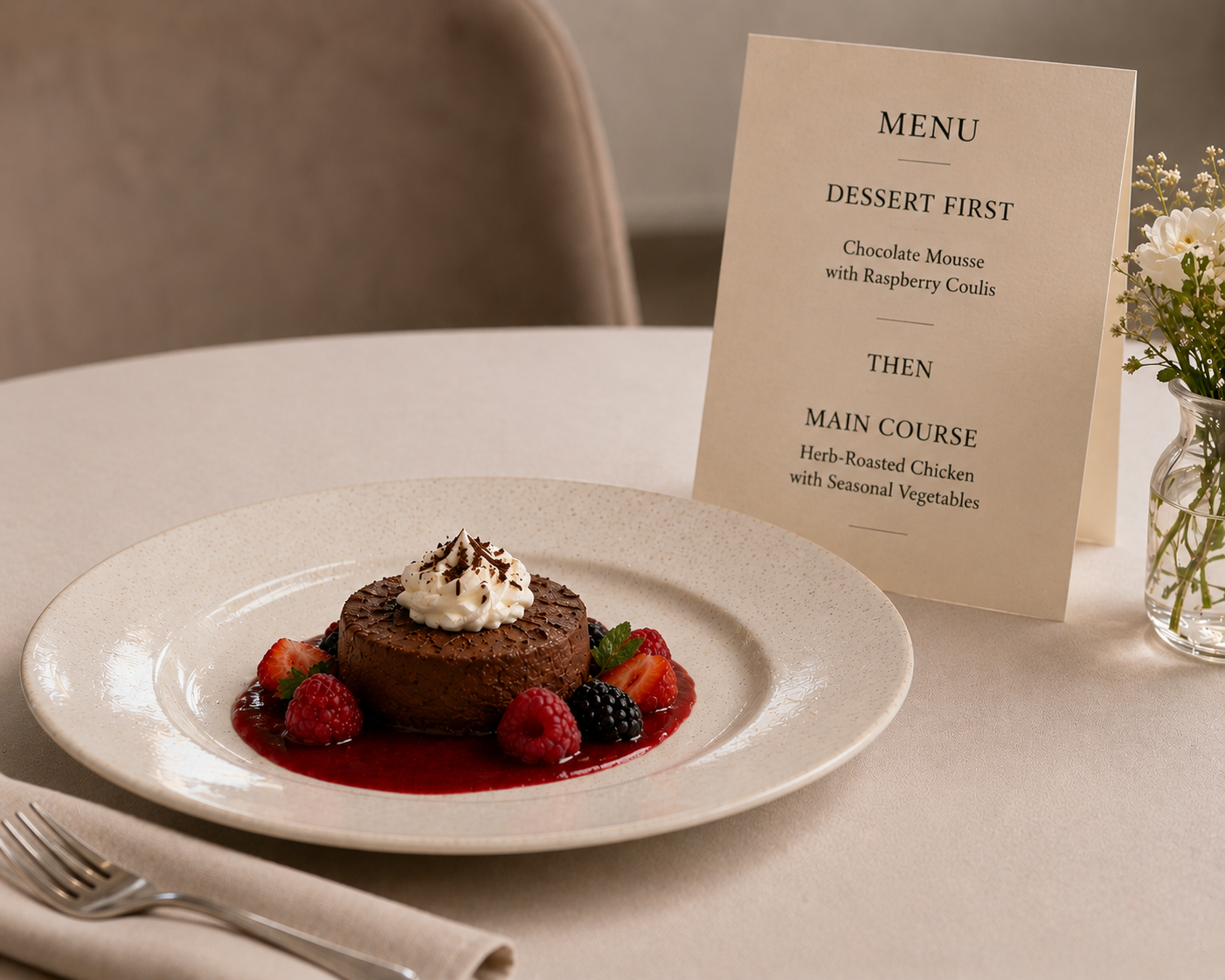
Pudding for Starters, Please
One day Milly refused her meal completely. Said she wasn’t hungry and didn’t even pick up her knife and fork.
So I gave her pudding.
She happily ate it.
Then, without mentioning the earlier refusal, I cleared the table and returned a few minutes later with a very small main course.
She may have questioned it for less than a second but ate the lot.
Perhaps the pudding got her taste buds going. Or perhaps it simply removed the pressure.
I don't really know. And that's probably the point.
Was it that particular pudding? Was it the smaller portion? Was it pure luck? Your guess is as good as mine. But I've discovered that acceptance is usually less exhausting than arguing!